When Communication Isn’t Enough: A Deeper Look at Couples Therapy
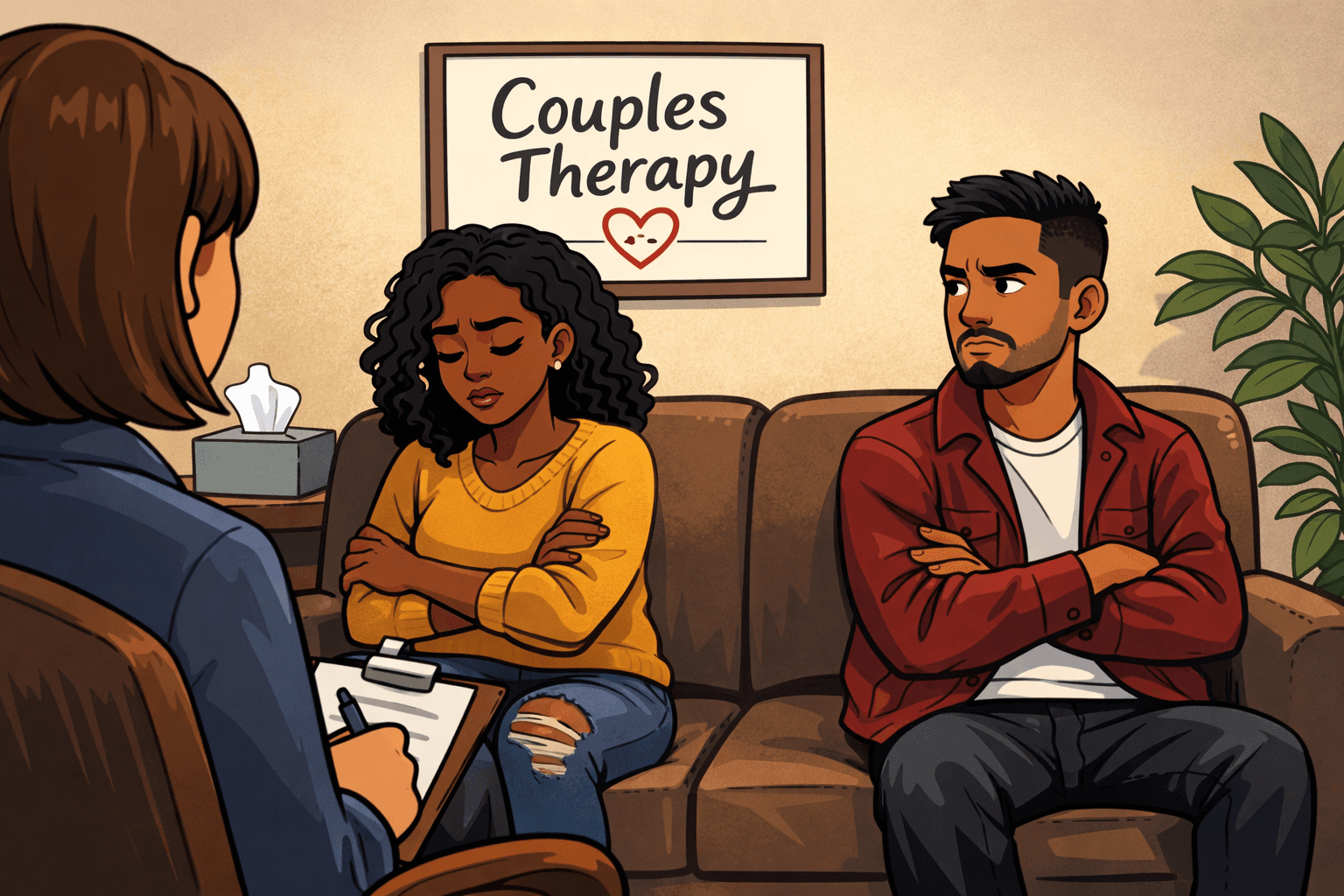
Are We Too Far Gone?
Most couples don’t come to therapy because they’re curious. They come because something feels fragile.
You might be:
Having the same argument on repeat
Feeling more like roommates than partners
Walking on eggshells
Recovering from betrayal
Wondering if you even like each other some days
And underneath all of it is the fear: “Is this fixable?”
The research suggests that therapy works not because couples eliminate conflict but because they learn to relate differently during conflict. When couples learn to interrupt negative interaction cycles and increase emotional responsiveness, relationship satisfaction improves.
What Actually Changes in Therapy
Here’s what couples therapy does when it’s effective:
You stop trying to win and you start understanding what’s being protected.
Using an Internal Family Systems approach (specifically IFIO for couples), we look at the reactive “parts” that take over during conflict.
For example:
The angry part may be protecting hurt.
The silent part may be protecting shame.
The controlling part may be protecting fear of losing connection.
When partners learn to recognize these parts instead of attacking each other from them, something softens.
You’re no longer fighting each other, instead, you’re working together against the pattern.
That shift is powerful because it doesn’t eliminate conflict but it makes conflict safer.
Emotional Regulation Improves
When partners become less reactive, arguments de-escalate more quickly. Studies show that physiological regulation (lower heart rate, reduced stress activation) predicts better conflict outcomes.
In Internal Family Systems–informed couples therapy (IFIO), this is addressed by helping partners separate from reactive “parts” and access more grounded states before engaging in difficult conversations.
Negative Cycles Are Identified and Replaced
From an IFIO lens, we explore the internal protectors driving those behaviours, allowing couples to step out of automatic responses and choose differently.
Emotional Responsiveness Increases
One of the strongest predictors of relationship satisfaction is feeling emotionally understood and responded to.
Research on attachment in adult relationships shows that when partners respond with empathy rather than dismissal, trust strengthens.Therapy helps partners practice this in real time.
Responsibility Replaces Blame
Couples who shift from “you always” statements to owning their emotional reactions show greater long-term improvement.
This is central to IFIO work where we learn to say, “A part of me reacted strongly,” instead of attacking from that reaction.
When Couples Therapy Works & When It Doesn’t
Couples therapy works when:
Both partners are willing to reflect on themselves (not just critique the other)
There is a genuine desire to understand what’s happening beneath reactions
Each person is open to taking responsibility for their patterns
It doesn’t work when:
One partner is completely disengaged
There is ongoing coercion or abuse
Therapy is being used to prove a point
The couples who see meaningful change aren’t perfect. They’re honest. They’re willing to pause mid-argument and say, “Something in me just got activated.”
That’s where repair begins.
So… Is It Worth Trying?
If you’re still asking the question, that usually means something in you still cares.
Couples Therapy is not about deciding who’s right. It’s about deciding whether you want to relate differently.
And for many couples, that shift changes everything.