Why Am I Tired All the Time? The Emotional Reasons Behind Constant Fatigue
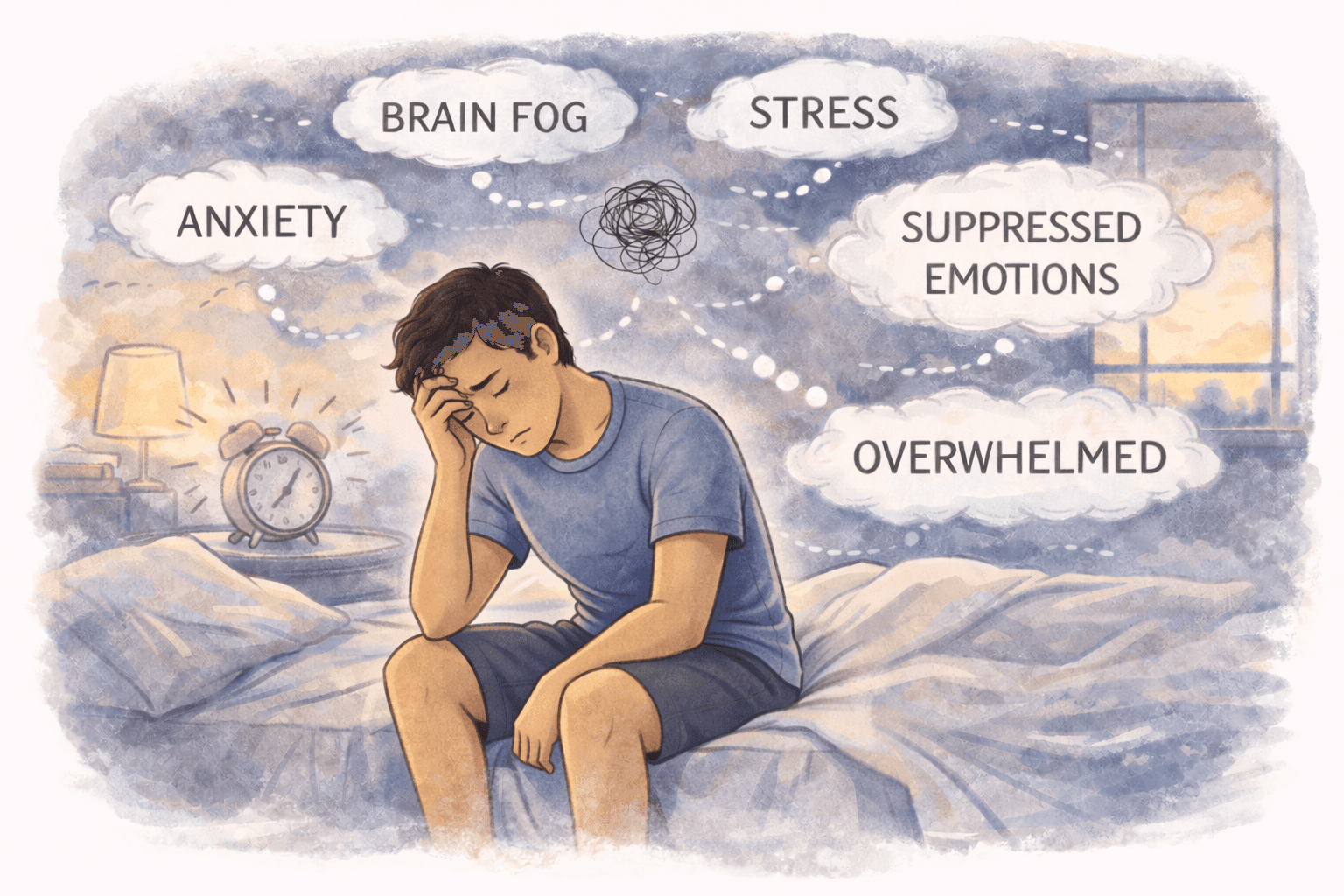
I'm Always Tired & I Don't Know Why
If you’ve been saying, “I’m just exhausted,” but nothing seems medically wrong, you’re not alone.
You’re sleeping.
You’re functioning.
You’re getting through your day.
But you feel depleted. Not just sleepy but heavy. And maybe what’s most confusing is that your life doesn’t look chaotic enough to justify this level of fatigue. This is where many people get stuck.
They assume tiredness must mean:
Poor sleep
A vitamin deficiency
Burnout from work
And sometimes it does. But often, chronic fatigue has a psychological component that’s harder to measure and easier to dismiss.
Sometimes you’re not tired because you’re doing too much physically. You’re tired because you’ve been holding too much emotionally.
Emotional Exhaustion Is Real (And It’s Draining)
Being “tired all the time” can be a nervous system issue.
If your system has been running on:
Anxiety
Hypervigilance
Perfectionism
Over-responsibility
Emotional self-control
Suppressed anger or grief
…it burns energy.
Constantly scanning for mistakes.
Constantly managing how you’re perceived.
Constantly anticipating conflict.
Constantly trying to be “good,” “capable,” or “strong.”
That’s exhausting.
Many high-functioning adults don’t realize how much effort they’re expending internally.
You can look calm and capable on the outside while your nervous system is working overtime underneath.
Over time, that shows up as:
Brain fog
Low motivation
Irritability
Emotional numbness
Feeling disconnected from joy
When Fatigue Is a Signal — Not a Flaw
Here’s something I often say in therapy: Your body speaks before your mind is ready to.
Chronic tiredness can be a signal that:
You’ve been over-functioning for too long
You don’t feel emotionally safe to slow down
You’re suppressing emotions that need space
Your boundaries are thin
You’ve been surviving instead of resting
Sleep helps physical fatigue but emotional exhaustion requires something different.
It requires:
Processing stress instead of pushing through it
Allowing anger or grief to exist
Reducing unrealistic internal standards
Learning emotional regulation instead of constant control
Letting yourself receive support
When clients begin addressing the emotional drivers of fatigue, something shifts. They don’t necessarily do less. But they carry less and that changes their energy.
If You’re Tired All the Time
If you’re constantly exhausted and can’t pinpoint why, it may be worth exploring whether emotional stress, anxiety, perfectionism, or long-term nervous system activation are contributing.
You don’t have to wait until you completely burn out.
Therapy can help you understand what’s draining you and how to build a more sustainable way of living. If you’re ready to feel less depleted and more steady, you’re welcome to reach out to explore next steps.